
Quick answer
Podcast clipping is cutting short vertical videos, usually 30 to 60 seconds, from a full episode to post on TikTok, Reels, and YouTube Shorts. Most 45 to 60 minute episodes yield 5 to 10 strong clips. Lead with a fast hook, add accurate captions, keep one idea per clip, and post 3 to 5 times weekly.
Key takeaways
- About 85% of weekly US podcast listeners now consume some video, so short clips are a main discovery channel.
- Aim for 5 to 10 strong clips from a typical 45 to 60 minute episode, and favor quality over quota.
- Start with 30 to 60 second clips that open on the hook and end on a payoff.
- Captions are essential because many people watch with sound off.
- Track watch time, follows, shares, and full-episode views, not just clip views.
You spent an hour recording a great episode. A few hundred people heard it. Meanwhile, a 40-second piece of that same conversation could reach tens of thousands on TikTok, Reels, and YouTube Shorts.
That is what podcast clipping does. This guide explains how it works, how many clips to make, what makes a clip perform, and whether to use AI tools or hire a team.
What is podcast clipping?
Podcast clipping means cutting short vertical videos, usually 15 to 90 seconds, from a full podcast episode and posting them on short-form platforms. Each clip pulls out one strong moment: a story, a hot take, a useful tip, or a funny exchange.
The goal is discovery. Short clips get shown to people who have never heard of your show. The best ones make viewers follow you or go find the full episode.
Why does clipping matter for podcasts in 2026?
Because podcasts are now video-first, and short video is where new listeners find you.
- According to Edison Research data reported by TechCrunch in February 2026, about 85% of weekly US podcast listeners now consume some video component, and podcasts passed AM/FM talk radio in share of spoken-word listening time for the first time.
- Edison's Infinite Dial 2026 found a record 58% of Americans listen to podcasts monthly, and 57% have both listened to and watched a podcast in the past month.
- YouTube said in February 2025 that podcasts reach more than 1 billion monthly viewers on its platform.
- YouTube CEO Neal Mohan said in June 2025 that Shorts averages 200 billion daily views, as reported by Search Engine Journal.
Put simply: the audience watches podcasts, and short clips are the front door.
How do you turn a podcast into short clips?
Here is the basic workflow our team follows for every episode.
- Record with clipping in mind. Film each speaker with their own camera or a clean wide shot. Good audio matters more than anything.
- Find the moments. Read the transcript or scrub the video. Mark stories, strong opinions, clear tips, and emotional reactions.
- Cut tight. Start right at the hook. Remove the warm-up, filler words, and long pauses.
- Reframe to vertical. Crop to 9:16 and keep the speaker's face centered. Switch between speakers as they talk.
- Add captions. Large, readable, on-screen text that matches the words exactly.
- Write a hook and caption. A short line on screen in the first second, plus a post caption with keywords.
- Post and track. Publish across TikTok, Reels, and Shorts, then watch which topics hold attention.
How many clips should you get from one podcast episode?
For a typical 45 to 60 minute episode, aim for 5 to 10 strong clips. Some long, high-energy interviews can produce 15 or more. Some episodes only have 3 that are truly good.
Quality beats quota. A weak clip trains the algorithm that your account is skippable. ByteCap's July 2026 research on podcast clips makes the same point: it recommends tracking how many clips you approve per hour of source footage instead of forcing a fixed number.
| Episode length | Typical strong clips | Good for |
|---|---|---|
| 20 to 30 minutes | 3 to 5 | Solo shows, tips episodes |
| 45 to 60 minutes | 5 to 10 | Interviews, co-hosted shows |
| 90+ minutes | 10 to 20 | Long-form interviews, live events |
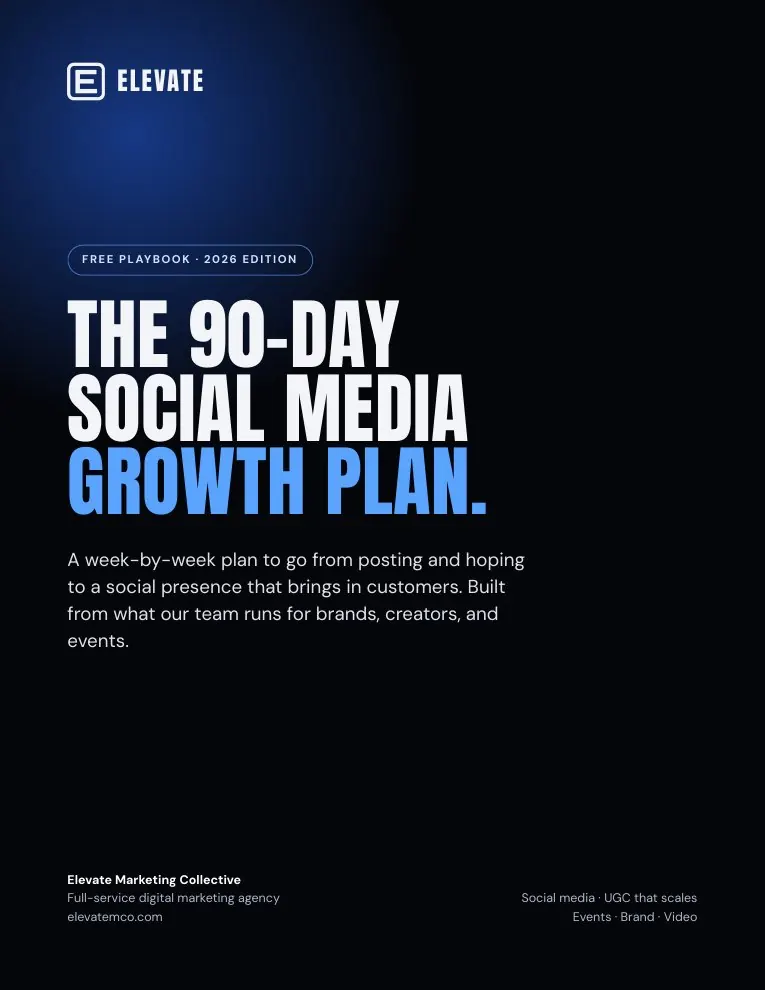
Free download
The 90-day social media growth plan.
A week-by-week plan, 30 scroll-stopping hooks, a content pillar worksheet, and a scorecard. 11 pages. Free.
Get the free planHow long should a podcast clip be?
Start in the 30 to 60 second range. That is long enough to tell a mini story and short enough to keep people watching.
ByteCap's analysis of an April 2026 OpusClip public dataset covering 308,462 podcast clips on YouTube found an average length of 58.5 seconds. That is a useful benchmark, but the researchers note it describes what people make, not what performs best. Test shorter cuts for punchy takes and longer cuts for stories.
What makes a podcast clip go viral?
Most viral clips share four things: a fast hook, one clear idea, captions, and a payoff.
Hooks
You have about one to two seconds. Open on the most surprising line, not the setup. Good hook types include:
- A bold claim: "Most people price their services wrong."
- A question: "Why do some podcasts grow and others stall?"
- A story start: "I almost quit the week before it took off."
- A disagreement: Two hosts pushing back on each other.
Add a short text hook on screen in the first frame. It works even when the sound is off.
Captions
Captions are not optional. In a Verizon Media and Publicis Media study of 5,616 US adults, 80% said they were more likely to watch an entire video when captions were available, and half said they usually watch with the sound off. The study is from 2019, but sound-off scrolling has only grown since.
Keep captions big, high contrast, and in the safe zone so platform buttons do not cover them. Check the spelling of names and brand terms every time.
One idea per clip
A clip that tries to cover three points usually lands none. Cut the moment down to one thought someone could repeat to a friend.
A payoff
End on the punchline, the answer, or the lesson. If the clip ends mid-thought, people feel cheated and swipe away before it loops.
Should you use AI clipping tools or hire a clipping service?
AI tools are fast and cheap. A human team is slower per clip but usually picks better moments and edits with more care. Many shows use both.
| AI clipping tools | Clipping service or editor | |
|---|---|---|
| Speed | Minutes per episode | A day or two per episode |
| Moment selection | Finds loud or keyword-heavy moments | Understands context, humor, and your audience |
| Captions | Automatic, needs proofreading | Checked and styled to your brand |
| Hooks and titles | Generic suggestions | Written for each platform |
| Posting and strategy | Usually on you | Often included with reporting |
| Best for | Solo creators testing volume | Brands and shows that want consistent growth |
A good middle path: let AI pull rough candidates, then have a person choose the best ones, tighten the cuts, and fix the captions. Our content clipping team works this way.
How often should you post podcast clips?
Post at least 3 to 5 clips per week per platform if you can. Daily is better when you have enough good moments.
Consistency matters more than bursts. Seven clips spread across a week will almost always beat seven clips dumped on one day. If you release one episode a week and pull 7 clips, you have a daily posting schedule built in.
For more on frequency, see how often to post on social media.
Which platforms should you post clips on?
- YouTube Shorts: Connects directly to your full episodes on the same platform.
- TikTok: Strongest for reaching people who have never heard of you.
- Instagram Reels: Great for building a community and DMs with guests and fans.
- LinkedIn: Worth it for business and B2B shows.
Post natively on each platform. Remove watermarks from other apps before uploading.
How do you measure if podcast clips are working?
Views feel good, but they are not the goal. Track these instead:
- Average watch time and completion rate: Shows whether your hooks and edits hold attention.
- Follows per clip: Shows whether viewers want more of you.
- Full-episode views and downloads: Check YouTube and podcast analytics week over week.
- Shares and saves: The strongest signal that a clip is valuable.
- Top topics: Which subjects consistently win. Use that to plan future episodes and guests.
Review results every two to four weeks. Do more of what works and stop making clips that nobody finishes.
What are the most common podcast clipping mistakes?
- Starting with "So, um, yeah" instead of the hook.
- Posting horizontal video with black bars.
- Small or inaccurate captions.
- Clips that need the full episode to make sense.
- Posting a burst of clips, then going quiet for weeks.
- Judging results after one week instead of one or two months.
How we do it at Elevate
Clipping is built on the same skills we use for short-form growth across our work. Our team helped Recapture Livestream, the #1 TikTok LIVE agency in the US, scale its creator community from about 6,000 to 20,000+ creators in under 12 months, and we coached creators to go viral, generating multiple six figures. We have also coached multiple creators from about 500 to 100K followers.
Volume matters too. We helped one personal brand grow reach 226% in 4 weeks mainly by posting more often. Clipping is the easiest way to get that volume without recording more.
We pick the moments, edit, caption, write hooks, and post, then report on what is working. Plans are custom and start with a free audit of your show and channels. You can also see how clipping fits into full social media management.
Want this done for you?
Content & Podcast Clipping by Elevate.
One episode becomes weeks of scroll-stopping clips for TikTok, Reels, and Shorts.
Frequently asked questions
What is podcast clipping?
Podcast clipping is cutting short vertical videos from a full episode and posting them on platforms like TikTok, Instagram Reels, and YouTube Shorts to reach new listeners.
How many clips should I make from a podcast episode?
Most 45 to 60 minute episodes produce 5 to 10 strong clips. Longer interviews can produce more, but only post clips that stand on their own.
How long should podcast clips be?
Start with 30 to 60 seconds. Use shorter cuts for quick takes and longer cuts for stories that need setup and a payoff.
Do podcast clips actually grow a podcast?
They help new people discover your show, especially on YouTube where clips and full episodes live together. Track follows and full-episode views to see the real impact.
Is it better to use AI tools or a clipping service?
AI tools are fast and inexpensive for testing volume. A clipping service or editor usually picks better moments, writes stronger hooks, and handles posting and reporting.
How often should I post podcast clips?
Aim for at least 3 to 5 clips per week on each platform, and daily if you have enough good moments. Consistency beats posting in bursts.
Sources
- TechCrunch: Americans now listen to podcasts more often than talk radio (Feb 2026)
- PodcastVideos: Infinite Dial 2026 podcast and social media findings
- Tubefilter: YouTube's podcasts now reach one billion users per month (Feb 2025)
- Search Engine Journal: YouTube reports 200 billion daily views for Shorts (June 2025)
- ByteCap: Podcast clips benchmarks research (July 2026)
- 3Play Media: Verizon Media and Publicis Media find viewers want captions
Elevate results reflect projects our team led or supported. Roles and capacity varied by project.