
Quick answer
A church social media strategy uses 4 to 5 content pillars (sermon clips, people stories, plan-your-visit info, events, and behind the scenes), posts 3 to 5 times a week on one or two platforms, answers first-timer questions, replies fast, and tracks first-time guests and attendance, not just likes.
Key takeaways
- Gen Z and Millennials are now the most regular churchgoers, and they find churches on their phones first.
- Four or five content pillars keep a church feed consistent and stop it from becoming a wall of flyers.
- One sermon can produce 3 to 6 short clips, enough to fill most of a week.
- Start with 3 to 5 posts per week on one or two platforms and stay consistent.
- Measure first-time guests and attendance trends, and ask every guest how they heard about you.
Most churches post on social media. Far fewer have a strategy. The difference shows up on Sunday: one church posts announcements and hopes, the other gives new people a clear look at what to expect and a reason to come.
This guide covers the parts of a church social media strategy that actually move attendance: content pillars, sermon clips, posting cadence, reaching new visitors, and how to measure it.
Why does social media matter for churches right now?
Because people check you out online before they ever walk in, and the people most open to church right now live on their phones.
- Barna Group and Gloo's 2025 State of the Church research found Gen Z churchgoers now attend about 1.9 weekends per month and Millennials about 1.8, nearly double their 2020 rate. Younger adults are now the most regular attenders.
- Pew Research Center's 2023-24 Religious Landscape Study found 23% of US adults watch religious services online or on TV at least monthly, and 40% engage with services in some way, in person or online.
- In a 2024 Barna survey, 70% of Christians said churches could benefit from better social media outreach.
Your feed is now your front porch. For many first-time guests, it is the first impression of your church.
What should a church post on social media?
Use content pillars. A pillar is a repeating category of content that serves a clear purpose. Four or five pillars keep you consistent without running out of ideas.
| Pillar | Purpose | Examples |
|---|---|---|
| Sermon and teaching | Show what you believe and how you teach | Sermon clips, quote graphics, short devotionals |
| People and stories | Show real community | Volunteer spotlights, baptism moments, member stories (with permission) |
| Plan your visit | Remove fear for first-timers | Parking, kids check-in, what to wear, service length, a walk-through video |
| Events and next steps | Move people to action | Groups, serve teams, special services, holiday events |
| Behind the scenes | Build warmth and trust | Worship rehearsal, setup crews, staff introductions |
Notice what is missing: a feed full of flyers. Announcements are fine, but if every post asks people to do something, they stop paying attention.
How do you use sermon clips on social media?
Sermon clips are the highest-value content most churches already have. You preach 30 to 45 minutes every week. Inside that are several 30 to 60 second moments that can reach people who will never watch the full message.
How to pick a good sermon clip
- One clear idea someone could repeat to a friend.
- A strong first line. Start on the point, not the setup.
- Everyday language. Moments that make sense to someone who has never been to church.
- Emotion or story. A personal story, a turning point, a moment of honesty.
How to edit sermon clips
- Crop to vertical (9:16) with the speaker centered.
- Add large, accurate captions. Many people scroll with sound off.
- Put a short text hook on screen in the first second.
- End on the point, not mid-sentence.
- Post natively on Reels, TikTok, YouTube Shorts, and Facebook.
A single sermon can give you 3 to 6 clips, which covers most of your week. Our podcast clipping guide walks through the same process in more detail, and our content clipping team can handle it for you.
How often should a church post on social media?
A realistic target for most churches is 3 to 5 feed posts per week on your main platform, plus stories several days a week. Consistency matters more than volume.
| Day | Sample post | Pillar |
|---|---|---|
| Sunday | Live stories from service, worship moment | Behind the scenes |
| Monday | Sermon clip #1 | Sermon and teaching |
| Tuesday | Volunteer or member spotlight | People and stories |
| Wednesday | Sermon clip #2 or quote graphic | Sermon and teaching |
| Thursday | Upcoming event or group sign-up | Events and next steps |
| Friday | Sermon clip #3 | Sermon and teaching |
| Saturday | "See you tomorrow" plan-your-visit post | Plan your visit |
If that feels like too much, start with three posts a week and build up. A small, steady schedule beats a big plan that fades in a month. For more detail by platform, see how often to post on social media.
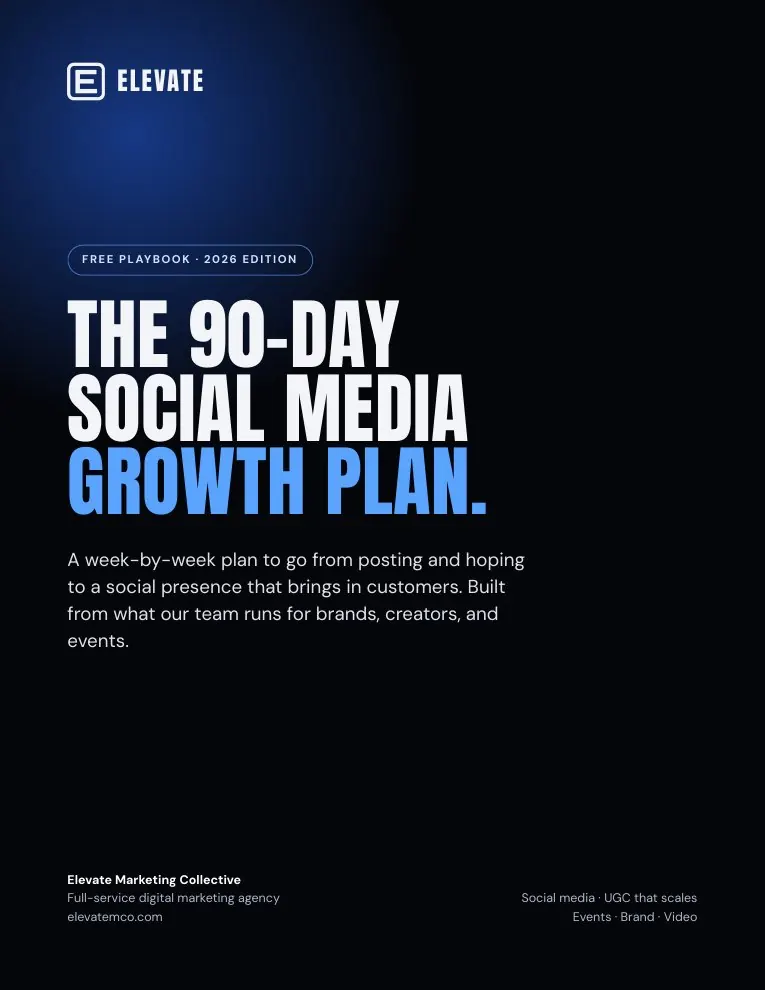
Free download
The 90-day social media growth plan.
A week-by-week plan, 30 scroll-stopping hooks, a content pillar worksheet, and a scorecard. 11 pages. Free.
Get the free planWhich social media platforms should a church use?
Pick one or two you can do well. Where your people already are matters more than what is trending.
- Facebook: Still the best place to reach adults 40 and up and your existing members. Edison Research's Infinite Dial 2026 found Facebook dominates among social media users 55 and older. Great for events, groups, and livestreams.
- Instagram: Strong for families and adults under 45. Reels, stories, and a clean grid that looks like your church.
- TikTok: The best reach to Gen Z and young adults who do not know you yet. Sermon clips and honest, short videos do well.
- YouTube: Home for full sermons and livestreams, plus Shorts for clips. Title videos with the questions people actually ask.
How can a church reach new visitors on social media?
Your members already follow you. Growth comes from reaching their friends and people nearby who have never heard of you.
- Make it easy to share. Short clips and honest stories get shared. Flyers rarely do.
- Answer first-timer questions. "What should I wear?" "What do my kids do?" "How long is service?" A 30-second video answering each one removes real fear.
- Use local targeting. Small paid boosts aimed at your area around Easter, Christmas, and series launches can put you in front of families nearby.
- Equip members to invite. Give them a ready-to-share graphic or clip each week with a simple "Come with me Sunday" message.
- Show real faces. Stock photos feel like an ad. Real people feel like a welcome.
- Respond fast. Reply to comments and messages within a day. A first-time guest who asks a question and hears nothing will not show up.
Your website and Google Business Profile matter too. Most people will look you up there after they see a post, so make service times and a "Plan your visit" page easy to find.
How do you measure if church social media is working?
Likes are nice. Attendance and next steps are the real goal. Track a mix of online and in-person signals.
| What to track | Why it matters |
|---|---|
| Reach and new followers | Shows whether you are reaching people beyond current members |
| Shares and saves | Shows content people want to pass along |
| Website visits to "Plan your visit" | Shows interest turning into intent |
| Messages and visit form sign-ups | Direct leads from social |
| First-time guests per month | The clearest attendance signal |
| "How did you hear about us?" answers | Connects guests back to social |
| Weekly attendance trend | The long-term result over 6 to 12 months |
Add a "How did you hear about us?" question to your connection card and guest form. It is the simplest way to see whether social is bringing people through the doors.
Give it time. Social media growth for churches usually shows in a few months, and attendance impact shows over six to twelve months of steady work.
What are common church social media mistakes?
- Posting only announcements and flyers.
- Insider language that new people do not understand.
- Going quiet for weeks, then posting five times in a day.
- Using stock photos instead of your own people.
- Ignoring comments and direct messages.
- Trying to be on every platform at once.
How we do it at Elevate
Our team worked with a local church on a 12-month engagement. Over that year, their social media went from a D- to a B+, and weekly attendance grew 33%. That is the kind of result a steady, well-planned strategy can support over time.
We also bring experience from worship and live music. Our team filmed and co-directed Echo Harbor Worship's live recording, set for release in 2027, and led marketing for Grace Music Festival 2025 in Metro Detroit, which drew 1,000+ attendees.
Every church is different, so every plan is custom. We start with a free audit of your current channels and show you where the biggest gains are. Learn more about our social media management service.
Want this done for you?
Social Media Management by Elevate.
Our flagship. Strategy, content, posting, and community handled every week, so you can run the business.
Frequently asked questions
What should a church post on social media?
Rotate between sermon clips, real member and volunteer stories, plan-your-visit information, upcoming events and next steps, and behind-the-scenes moments. Keep announcements to a small share of your posts.
How often should a church post on social media?
Aim for 3 to 5 feed posts per week on your main platform plus stories several days a week. Consistency matters more than volume.
What is the best social media platform for churches?
Facebook reaches older adults and current members best, Instagram reaches families and younger adults, TikTok reaches Gen Z, and YouTube is ideal for full sermons and livestreams. Choose one or two you can do well.
Can social media really grow church attendance?
Yes, when it is consistent and focused on helping new people feel ready to visit. Track first-time guests and ask how they heard about you to see the connection.
Should a church post sermon clips?
Yes. Short sermon clips of 30 to 60 seconds with captions are one of the best ways to show your teaching to people who would never watch a full service online.
Who should run a church's social media?
A staff member, a trained volunteer team, or an outside agency can work. What matters is one clear owner, a weekly plan, and fast replies to comments and messages.
Sources
- Religion News Service: Gen Z and Millennials are now the most regular churchgoers (Barna and Gloo, Sept 2025)
- Pew Research Center: Religious attendance and congregational involvement (2023-24 Religious Landscape Study)
- Barna Group: Christians say churches could benefit from digital tools
- PodcastVideos: Infinite Dial 2026 podcast and social media findings
Elevate results reflect projects our team led or supported. Roles and capacity varied by project.